Key Points
- Arizona’s extreme heat and hard water cause minerals and chemicals to concentrate over time
- Evaporation does not remove calcium or stabilizer, which leads to water that becomes impossible to balance
- Most pools in Queen Creek require partial or full draining every 2–3 years
- Proper draining protects plaster, tile, heaters, and filtration systems from scale and damage
- Professional water replacement prevents costly long-term repairs and chemical waste
Important Definitions
Total Dissolved Solids (TDS):
The combined amount of minerals, metals, salts, and organic matter in pool water. High TDS makes water difficult to balance and cloudy.
Calcium Hardness:
The amount of dissolved calcium in pool water. Arizona’s source water is naturally high in calcium, with tap water often testing between 700–900 ppm, which increases scaling risk and leads to rapid mineral buildup in pools.
Stabilizer (Cyanuric Acid):
A chemical that protects chlorine from sunlight. Stabilizer does not evaporate and builds up in the water, reducing chlorine effectiveness when too high.
Evaporation Concentration:
The process where water evaporates but minerals and chemicals remain, causing their levels to rise.
Scale Formation:
Hard mineral deposits that accumulate on tile, plaster, heaters, and inside plumbing when calcium levels are too high.
Pool Water vs. Tap Water Salinity:
Pool water has a higher salinity level than tap water due to accumulated chemicals and salts. This higher salinity can affect which types of plants can be safely watered with drained pool water, so caution is needed if considering pool or saltwater for irrigation.
How Often Should You Drain and Refill a Pool in Arizona?
In Queen Creek, draining and refilling a pool is not a sign of failure. It is a necessary part of responsible pool ownership.
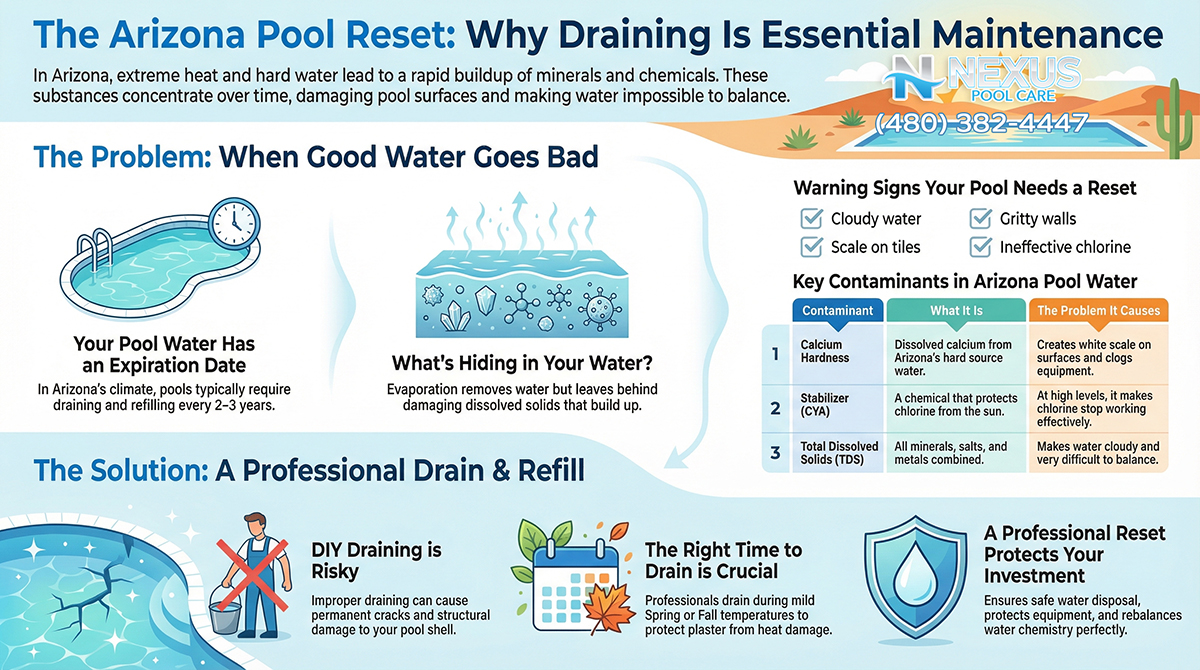
In Arizona, you should typically drain and refill your pool every 2 to 5 years, or sooner if Calcium Hardness (CH), Total Dissolved Solids (TDS), or Cyanuric Acid (CYA) levels become too high. It is recommended to consult a pool professional to determine the best time to drain your pool. The best time to drain a pool in Arizona is during late fall (October to November) or early spring (March to April) when temperatures are mild.
Arizona’s climate creates conditions that trap minerals and chemicals in the water. As water evaporates, calcium, stabilizer, and total dissolved solids stay behind. Over time, the water becomes so saturated that no amount of chemical adjustment can restore proper balance, making it necessary to drain and then fill the pool with fresh water.
What Causes Pool Water to Go Bad in the Desert
Extreme Evaporation
Arizona pools lose large amounts of water each year. The replacement water adds new minerals while old ones never leave. High evaporation rates in Arizona can lead to a loss of up to 4 to 6 feet of water annually, which accelerates mineral concentration.
Hard Source Water
Queen Creek’s municipal water contains high calcium levels, accelerating scale buildup. When using pool water for irrigation, it is important to consider salt tolerant plants and monitor landscape water use to prevent damage from higher salinity. Monitoring landscape water also helps with water conservation and leak detection.
Chemical Accumulation
Stabilizer, salt, and byproducts of sanitation continue to rise with no natural removal.
High Temperatures
Heat speeds chemical reactions and worsens mineral scaling.
Signs Your Pool Needs to Be Drained
- Cloudy water that will not clear
- White calcium scale on tile or surfaces
- Rough or gritty pool walls
- Rapid pH changes
- Chlorine that no longer works properly
- Rising stabilizer above safe levels
How Often Arizona Pools Typically Need Draining
Most pools in Queen Creek require draining every 2–3 years.
High-use pools, saltwater pools, and pools with frequent evaporation may require partial draining more often.
Safe Draining Practices in Arizona
Best Time of Year:
Spring or fall when temperatures are moderate.
Never Drain in Extreme Heat:
High temperatures can crack plaster and damage the pool shell.
Protect the Structure:
Draining must follow strict procedures to prevent structural movement.
Safe Draining Practices and Local Regulations:
Most Arizona cities require that pool water is drained into the on-property sewer clean-out near your house, not into the street or storm drains, to comply with local ordinances and county health regulations. Pool draining services in Arizona typically follow these local regulations to ensure safe discharge of water. If you do not have a sewer clean-out, you can discharge clean pool water into the right-of-way only if you have a permit. The Town of Gilbert does not require a permit to drain your pool, but you must follow specific guidelines. Discharging pool backwash and saltwater pools is prohibited in Phoenix. When discharging pool water, ensure the chlorine level is less than 1 ppm, and remember that pool water contains more salt and chlorine than tap water, which can affect your yard and landscaping.
Plumbing and Discharge Considerations:
Use the right size pipe for draining—never install a drain line as a permanent fixture, as this may violate plumbing codes and county health regulations. The maximum recommended discharge rate is 12 gallons per minute to prevent backups in your home’s plumbing. Always consult a plumber to locate or install a sewer clean-out and ensure proper plumbing connections. The sewer clean-out is typically found in the yard close to the house. Avoid draining water into city streets or alleys to prevent contamination and fines.
Filter Cleaning and Backwash:
When performing pool maintenance, backwash your filter according to manufacturer guidelines and dispose of the backwash water properly, following local regulations.
Professional Assessment Required:
Improper draining can cause severe damage and costly repairs. Pool service companies in Arizona can provide free estimates for draining and other services.
Pool Equipment Protection During Draining
Protecting your pool equipment during the draining process is essential for maintaining the long-term health and efficiency of your swimming pool—especially in Arizona’s demanding climate. Whether you own a residential or commercial pool, or manage a saltwater system, taking the right steps can prevent costly repairs and keep your pool water clean and safe.
Shut Down and Secure Equipment:Before you begin draining, always shut off the pool pump immediately and disconnect the drain hose from your pool equipment. This prevents dirt, debris, and air from entering the system, which can cause damage or clogging. For added protection, cover your pump, filter, and other exposed equipment to shield them from dust, rain water, and the harsh Arizona sun.
Use the Right Tools and Connections:Always use a drain hose specifically designed for pool use, and ensure it is securely attached to a submersible pump. Direct the drain line to your property’s sanitary sewer cleanout—never to a storm drain—to comply with local regulations and protect the environment. The sewer cleanout is typically located at ground level; make sure it’s accessible and not hidden by landscaping or dirt. If your property has only one opening, confirm it leads to the sanitary sewer main, not a bathroom or other fixture.
Monitor Water Flow and Prevent Backs:To avoid flooding or water backs, check that the drain line is properly fitted and consider installing a raised square nut for extra security. Be mindful of the maximum recommended discharge rate for your area, and never let water pool in the same area repeatedly, as this can damage landscaping and create safety hazards.
Maintain Optimal Water Chemistry:After draining and refilling, immediately check and adjust your pool’s calcium hardness and cyanuric acid levels. Properly balanced water chemistry protects your pool surface and equipment, and ensures a safe swimming environment. Regularly clean your filtration system and monitor chemical levels to prevent buildup and maintain water quality.
Plan for Water Conservation:In Queen Creek and the East Valley, water conservation is a priority. Use a submersible pump to control the flow rate and minimize waste. If you have salt tolerant or salt sensitive plants near your pool, take care to direct discharge away from landscaping to prevent damage.
Professional Maintenance Matters:Routine pool services—including cleaning, equipment inspection, and chemical balancing—are the best way to prevent equipment damage and extend the life of your investment. Professional pool cleaning services, like those from Nexus Pool Care, ensure your pool equipment is properly maintained and your water chemistry remains optimal year-round.
Cost and Long-Term Value:While the cost of equipment protection and maintenance varies by pool size and service frequency, proactive care always pays off. By investing in regular maintenance and following best practices during draining, pool owners can avoid expensive repairs and enjoy a safe, beautiful pool for years to come.
If you’re unsure about the right steps for your pool, or want peace of mind that your equipment is protected, consult with a trusted pool service provider. Nexus Pool Care is here to help Queen Creek homeowners keep their pools—and their equipment—in top condition, season after season.
Why You Should Call Nexus Pool Care Before Draining Your Pool
Draining a pool in Arizona is not a simple task. When done incorrectly, it can cause permanent structural damage, surface cracking, equipment failure, and major financial loss. That is why homeowners in Queen Creek trust Nexus Pool Care for professional pool draining and refilling.
Structural Protection
Our technicians evaluate groundwater conditions, hydrostatic pressure, soil conditions, and pool construction before any water is removed. This prevents shell shifting, cracking, and surface failure.
Plaster and Surface Safety
We schedule draining only during safe temperature windows and apply controlled procedures to protect plaster, pebble, and tile finishes from thermal damage.
Equipment Preservation
Our team safeguards pumps, filters, heaters, and plumbing during the process so systems restart correctly after refilling.
Water Chemistry Reset
Once refilled, we rebalance calcium hardness, stabilizer, chlorine, pH, and alkalinity to ensure the pool starts fresh with stable, safe water.
Compliance and Environmental Responsibility
We follow local regulations for proper water disposal, preventing property damage and municipal violations.
By choosing Nexus Pool Care, homeowners avoid the high-risk mistakes that often occur with DIY draining and ensure their pool investment remains protected.
The Bottom Line
In Queen Creek’s desert climate, water replacement is essential to long-term pool health. Regular draining protects equipment, reduces chemical waste, and keeps your pool safe and clear. Nexus Pool Care delivers expert draining and refill services designed for Arizona’s unique conditions.
Frequently Asked Questions
Can chemicals fix old pool water?
No. Once minerals and stabilizer reach high levels, the only solution is water replacement.
Is draining a pool risky?
Yes if done improperly. Professional draining prevents structural damage.
How long does the draining process take?
Most pools are fully drained and refilled within 24–48 hours.
Does draining save money long-term?
Yes. It reduces chemical use, prevents equipment damage, and extends surface life.
Can I partially drain instead of fully draining?
Often yes. Partial drains can reduce buildup while minimizing water use.