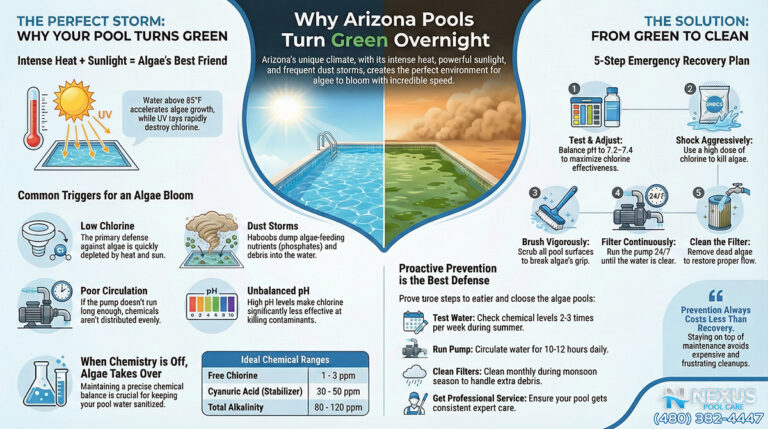
Key Points
- Arizona monsoon storms introduce heavy dust, debris, and contaminants into pools
- Proactive preparation prevents algae blooms, equipment damage, and water imbalance
- Neglecting post-storm pool cleaning can lead to a costly headache for homeowners
- Post-storm cleanup must follow a strict process to avoid costly filtration problems
- Consistent professional pool cleaning ensures your pool remains clean and swim-ready all season
Important Definitions
Monsoon Season:The seasonal weather pattern in Arizona, typically from June through September, marked by high winds, dust storms, and sudden rainfall.
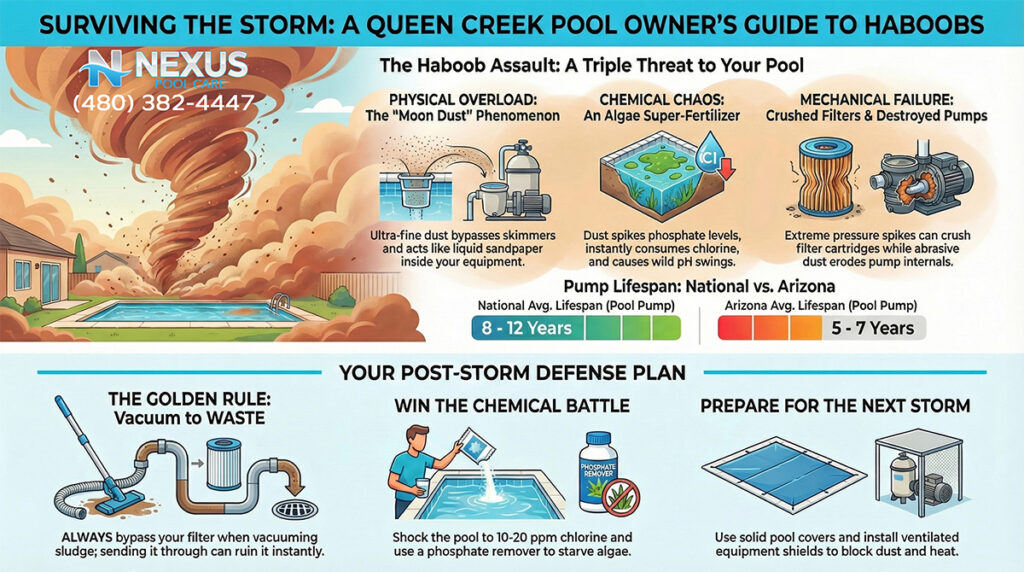
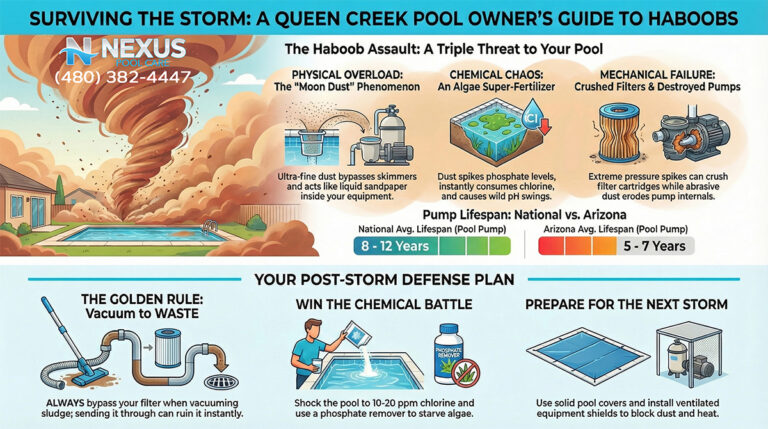
Haboob:A powerful desert dust storm that carries fine silt, phosphates, and organic debris into swimming pools.
Phosphates:Nutrients that fuel algae growth. Dust storms and runoff in Queen Creek introduce high phosphate levels into pool water.
Shock Treatment:A concentrated dose of chlorine used to destroy organic contamination after storms.
Vacuum-to-Waste:A cleaning method that removes debris directly from the pool without passing it through the filter, protecting the filtration system.
Acid Washing:A pool maintenance process that uses a diluted acid solution to remove stains, mineral buildup, and algae from the pool’s surface, restoring its original shine without damaging the finish.
Calcium Hardness:The measure of dissolved calcium in pool water. Proper calcium hardness levels are essential for water clarity and to prevent scaling or corrosion; high levels can cause cloudy water.
Cartridge Filter:A type of pool filter that uses a replaceable cartridge element to trap debris. Cartridge filters require periodic cleaning and replacement to maintain optimal water quality and filter efficiency.
Cloudy Water:A common pool issue where water appears hazy or milky, often caused by pollutants, phosphates, or imbalanced water chemistry after storms.
pH Levels:A measure of how acidic or basic the pool water is. Maintaining proper pH levels is crucial for water quality, swimmer comfort, and preventing issues like skin irritation, algae growth, and bacterial contamination.
Sand Filters:A pool filtration system that uses sand to trap debris and particles. Sand filters are effective for maintaining water clarity and require regular backwashing and maintenance.
Total Alkalinity:The measure of water’s ability to resist changes in pH. Proper total alkalinity helps stabilize pH levels, maintain chemical balance, and ensure swimmer comfort.
Water Balance:The overall chemical equilibrium in pool water, including pH, alkalinity, calcium hardness, and sanitizer levels. Proper water balance is essential for clarity, safety, and protecting pool surfaces and equipment.
Monsoon Season Pool Prep Checklist for Queen Creek Homeowners
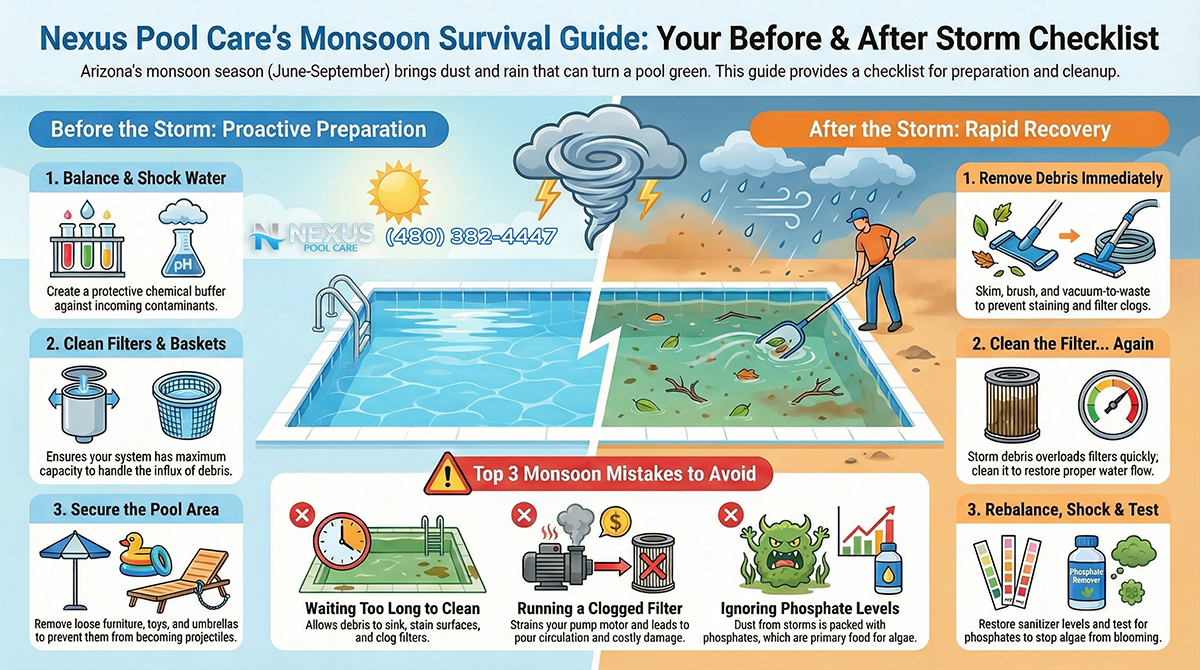
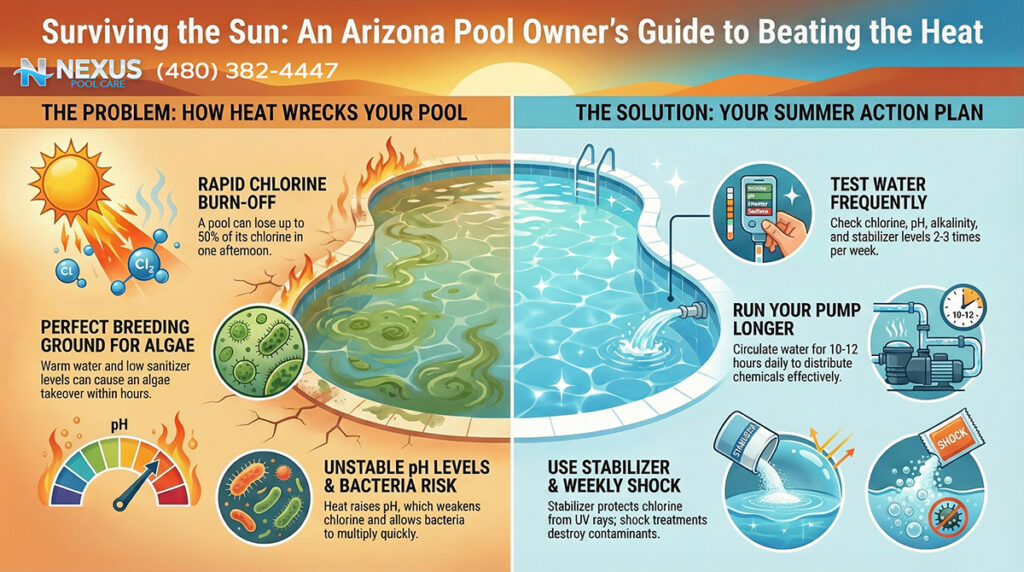
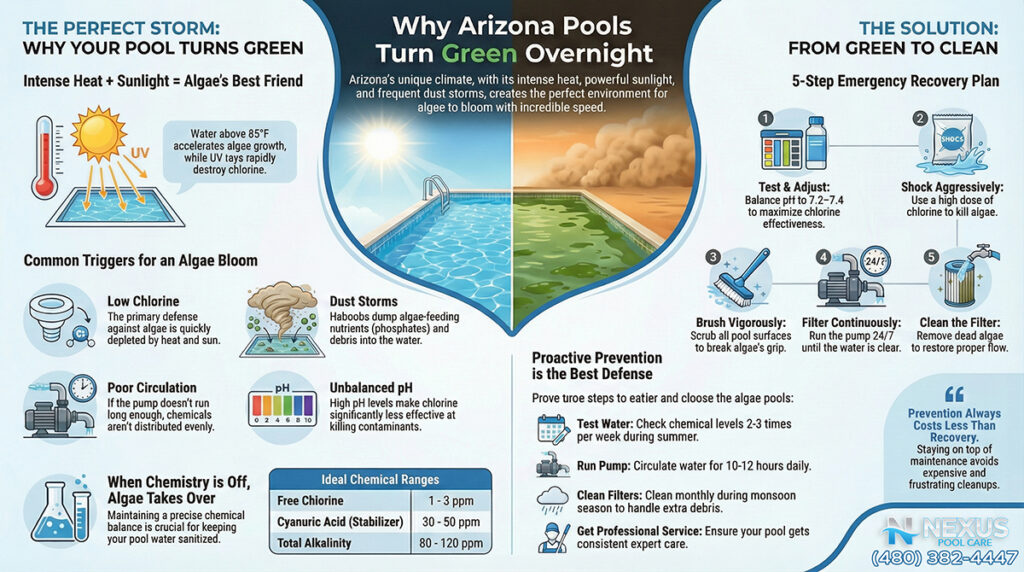
Monsoon season is the most dangerous time of year for swimming pools in Queen Creek. A single storm can wreak havoc on your Queen Creek pool, causing debris buildup from leaves, twigs, dirt, and other debris, while also introducing chemicals like pollutants, phosphates, and fertilizers that disrupt water chemistry and promote algae growth. High winds, intense dust storms, and sudden rain overwhelm pool chemistry and filtration systems within hours. It’s essential to promptly remove debris from all areas of the pool to prevent clogged filters and further water quality issues. Without preparation, a single storm can turn a clear pool into a green disaster.
Nexus Pool Care’s team provides specialized services in Queen Creek to restore crystal-clear water after storms, ensuring your pool is safe, clean, and swim-ready.
The following checklist helps protect your pool before, during, and after monsoon events.
How Monsoons Affect Pools
- Heavy debris and dust contamination: Monsoon winds and rain can carry leaves, twigs, dirt, and other debris into your pool, leading to potential clogging of the filtration system and disruption of water chemistry.
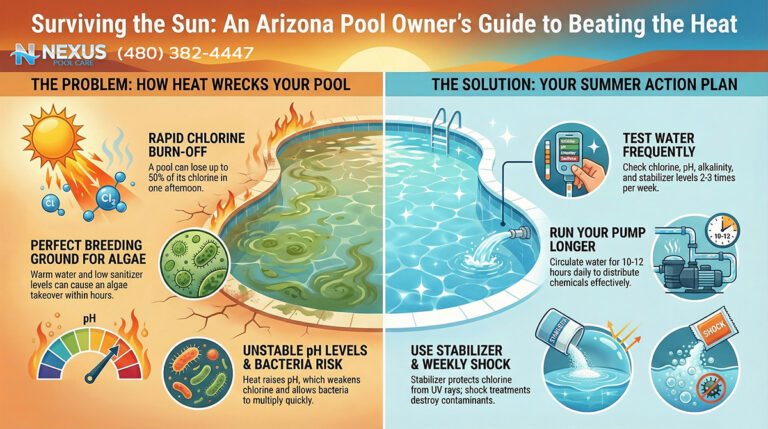
- Rapid chlorine depletion
- Elevated phosphate levels
- Cloudy water: Rainwater runoff introduces phosphates and pollutants, often resulting in cloudy water and making it harder to maintain water clarity and chemical balance.
- Filter overload and reduced circulation: Excess debris can overload your pool filter, reducing filter performance and making it less effective at keeping your water clean.
- Increased algae growth
- Staining or buildup on pool walls: Storms can cause stains or buildup on pool walls, requiring extra attention to maintain their appearance and prevent long-term damage.
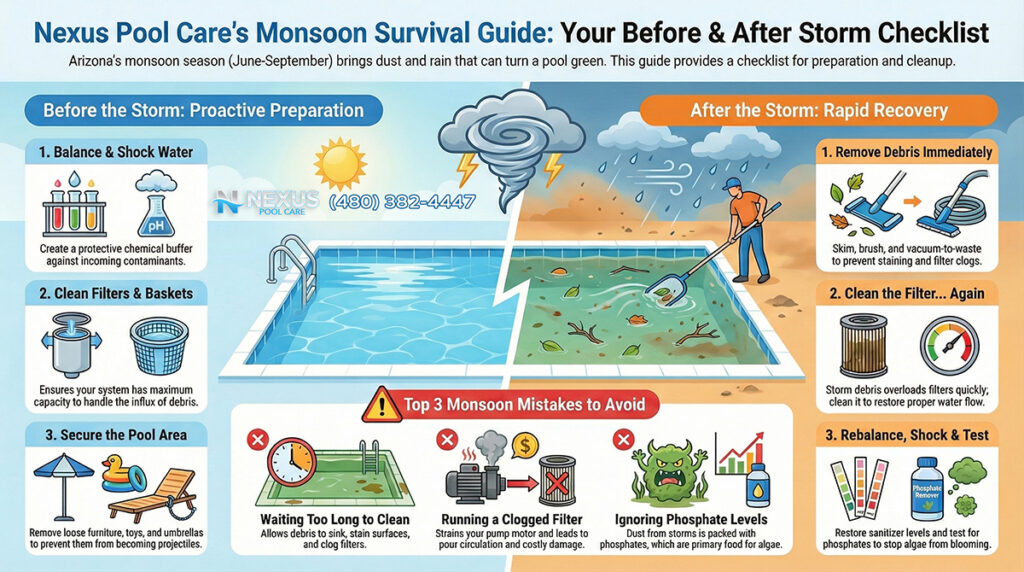
Pre-Monsoon Pool Maintenance Preparation Checklist
- Balance Water Chemistry
Test chlorine, pH levels, total alkalinity, calcium hardness, and stabilizer. Bring all levels into their normal ranges to maintain proper water balance and prevent water clarity or equipment issues. - Shock the Pool
Raise chlorine levels before storms to create a protective buffer. - Clean the Filter
Clean both cartridge filters and sand filters to ensure maximum filtration capacity before heavy debris arrives. - Empty Skimmer and Pump Baskets
Prevent blockages and circulation loss. - Inspect Equipment
Check pump, seals, and plumbing for leaks or cracks. Inspect for worn out equipment and signs of water loss to prevent future problems. - Secure Pool Area
Remove loose furniture, toys, and umbrellas that can damage surfaces.
Post-Storm Cleanup Steps to Prevent Algae Growth
After a monsoon storm, comprehensive pool cleaning is essential to restore water quality, remove debris, and eliminate chemicals introduced by runoff, such as pollutants, phosphates, and fertilizers. These contaminants can disrupt water chemistry, promote algae growth, and lead to issues like eye irritation for swimmers.
- Skim Immediately
Remove debris from the pool’s surface, floor, and walls before it sinks or causes staining. - Brush Walls and Floor
Brush the pool’s surface, including walls and floor, to knock dust and algae spores loose and prevent staining or buildup. - Drain Excess Water
If the water level is above normal, drain excess water from the pool to prevent damage to pool walls and equipment. - Vacuum Thoroughly
Use vacuum-to-waste when possible after heavy dust storms to remove fine debris. - Clean the Filter Again
Storm debris clogs filters quickly, so clean or backwash the filter to maintain proper flow. - Shock and Rebalance Water
Restore sanitizer and proper pH. Improper chemical balance after storms can cause skin and eye irritation, so ensure all levels are correct. - Test for Phosphates
Apply phosphate remover if levels are elevated to prevent algae growth.
Common Monsoon Mistakes Homeowners Make
- Waiting too long to clean after storms
- Running clogged filters
- Skipping shock treatments
- Ignoring rising phosphate levels
- Allowing debris to sit on pool surfaces
Pool Draining and Refilling
Pool draining and refilling is an essential part of pool maintenance for Queen Creek homeowners, especially after heavy dust storms or persistent algae growth. Over time, pool water can accumulate excess debris, minerals, and contaminants that regular cleaning and chemical treatments may not fully remove. Draining the pool allows you to eliminate this buildup, while refilling with fresh water helps restore the proper chemical balance and clarity needed for safe swimming.
Because improper draining can cause structural damage or equipment issues, it’s important to trust a professional pool company with this process. Experts will ensure that excess water is removed safely, debris is cleared away, and the filtration system is protected throughout. Regular pool maintenance—including weekly cleaning, equipment checks, and monitoring of chemical levels—can help minimize the need for frequent draining and refilling. By keeping your pool’s surface clean and your filtration system running efficiently, you’ll enjoy a sparkling pool year-round, even in the face of Queen Creek’s challenging weather.
Pool Safety Features
Ensuring your swimming pool is equipped with the right safety features is crucial for every Queen Creek backyard oasis. Installing secure fencing, self-closing gates, and pool alarms helps prevent unauthorized access and keeps children and pets safe. But safety doesn’t stop at physical barriers—regular maintenance of your pool equipment, such as the pool pump and filtration system, is equally important. Well-maintained equipment reduces the risk of malfunctions that could lead to unsafe swimming conditions.
Professional pool service providers in Queen Creek can inspect and maintain all safety features, from checking chemical levels to ensuring proper chemical balance and reliable pump operation. By scheduling regular maintenance and service, you protect your family and guests, giving everyone peace of mind while enjoying the pool. Prioritizing safety means your swimming pool remains a secure and enjoyable retreat all season long.
How Nexus Pool Care Helps Homeowners Recover After Monsoon Storms
Monsoon storms in Queen Creek can overwhelm even well-maintained pools. High winds, heavy dust, rain, and debris introduce phosphates, organic matter, and fine silt that quickly disrupt chemical balance and clog filtration systems. Without professional intervention, many homeowners find themselves battling cloudy water, algae growth, and damaged equipment within days of a storm.
Nexus Pool Care provides specialized post-monsoon recovery services designed for Arizona’s extreme conditions.
Immediate Water Assessment
After a storm, our technicians perform detailed water testing to evaluate chlorine, pH, alkalinity, stabilizer, calcium hardness, and phosphate levels. This allows us to identify chemical imbalances before algae can establish itself.
Storm Debris Removal
We remove surface debris, vacuum settled dust, and brush walls and tile to eliminate organic buildup and prevent staining. When necessary, we use vacuum-to-waste methods to protect your filtration system from fine desert silt.
Chemical Stabilization and Shock Treatment
We apply precise shock treatments and adjust chemical levels to restore sanitation quickly. This prevents algae blooms and bacteria growth that commonly follow monsoon events.
Filter and Equipment Protection
Our team inspects filters, pumps, seals, and plumbing after storms to ensure proper circulation and prevent damage caused by clogged systems or abrasive dust. Early detection protects expensive equipment and avoids emergency repairs.
Ongoing Prevention and Monitoring
For customers on weekly service plans, Nexus Pool Care increases monitoring frequency during monsoon season, applying preventive algaecide and phosphate control to keep pools clear through repeated storm cycles.
By acting quickly and applying region-specific recovery protocols, Nexus Pool Care helps Queen Creek homeowners restore their pools faster, reduce long-term damage, and avoid the costly cycle of green water and emergency cleanups that so many experience during monsoon season.
Energy Efficiency Tips
Energy efficiency is top of mind for many pool owners in Queen Creek and San Tan Valley, where high temperatures can drive up energy bills. To keep your pool running efficiently, consider upgrading to a variable-speed pool pump, which uses less electricity than traditional models. Installing a solar pool heater can also help you maintain comfortable water temperatures without increasing your carbon footprint. Optimizing your pool filtration system and keeping your pool filter clean ensures that your equipment runs smoothly and doesn’t waste energy.
Regular pool maintenance—including checking chemical levels and scheduling routine service—can further reduce energy consumption by preventing equipment strain and prolonging the life of your pool systems. Locally owned pool companies offer personalized service and can recommend energy-efficient solutions tailored to your specific needs. By adopting these practices, you’ll enjoy a cleaner, more sustainable swimming experience while saving money on utility costs.
Pool Maintenance Costs
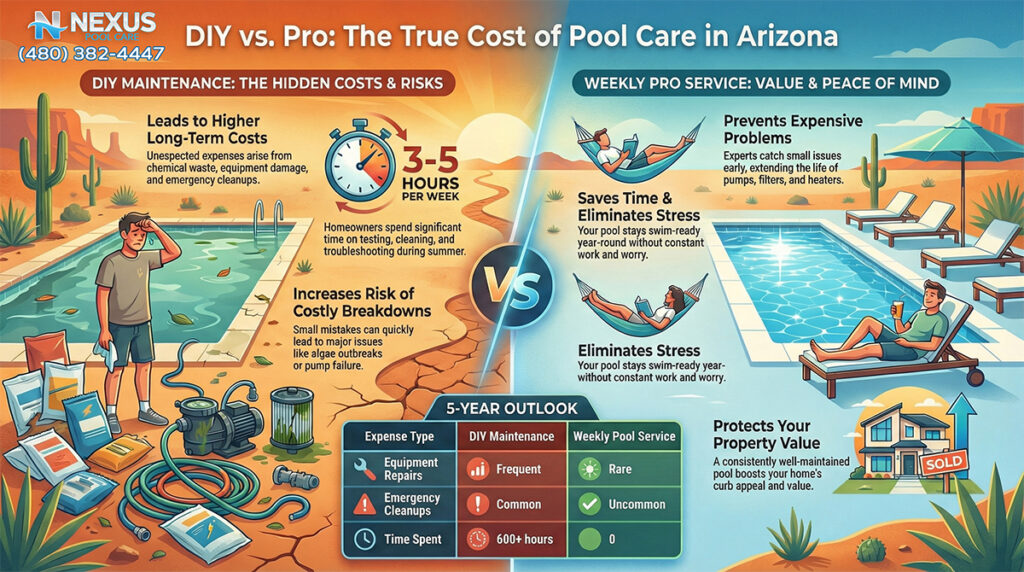
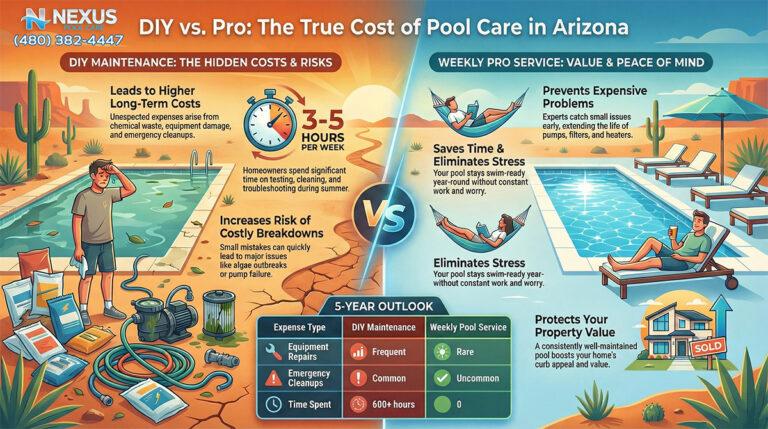
Understanding pool maintenance costs is key for Queen Creek homeowners who want to keep their pools in top condition without unexpected expenses. Factors such as pool size, frequency of use, and the type of equipment you have all influence the overall cost. In areas prone to dust storms and algae growth, regular pool maintenance is essential to prevent debris accumulation, equipment failure, and costly repairs.
Typical maintenance expenses include chemical balancing, equipment checks, weekly cleaning, and debris removal. Partnering with a professional pool service ensures that all aspects of your pool are cared for, and many companies provide detailed reports so you know exactly what services have been performed. Investing in weekly maintenance—such as vacuuming, brushing the pool’s surface, and monitoring chemical levels—helps prevent algae outbreaks and keeps your equipment running efficiently. By staying proactive, pool owners can avoid major repairs and enjoy a safe, sparkling pool all year long, making regular maintenance an essential part of protecting your investment.
The Bottom Line
Queen Creek’s monsoon season places extreme stress on pool systems. Preparation and fast recovery prevent algae, protect equipment, and keep water safe. Nexus Pool Care handles monsoon season challenges so homeowners can enjoy their pools without constant emergency cleanups.
Frequently Asked Questions
How often should I shock my pool during monsoon season?
At least once per week and after every major storm.
Can dust storms cause algae growth?
Yes. Dust carries phosphates and organic matter that feed algae.
Should I drain my pool before heavy rain?
No. Draining before storms can cause structural damage due to hydrostatic pressure.
How long does post-storm cleanup take?
With proper tools and experience, most pools recover within 24–48 hours.
Do I need professional service during monsoon season?
Yes. Professional monitoring prevents long-term damage and costly repairs.